

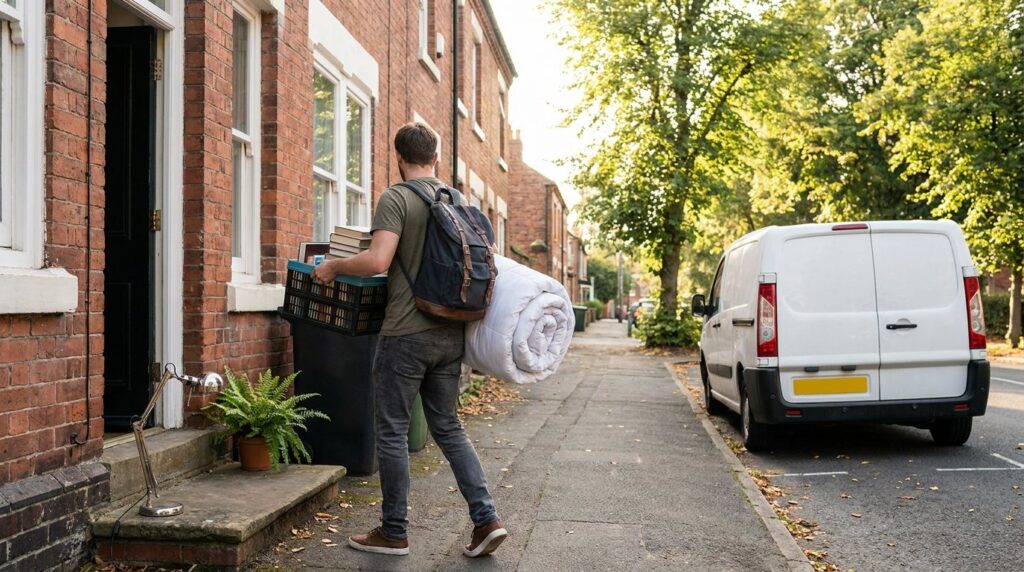
The end of a shared student tenancy can feel like five separate moves happening in one hallway. Everyone is heading somewhere different, some to a new house share across the city, some home for the summer, and the landlord wants the place empty, clean and returned by a fixed date. Organising it as a household rather than as individuals saves money, tempers and, quite often, a good part of the deposit.
Agree a plan early in the final term
Sit down as a house a few weeks before the end date and write down three things: when each person is leaving, where their belongings are going, and who is responsible for which shared rooms. A simple shared document or group chat note is enough. The aim is to avoid the familiar last-day problem of one person left alone with a full kitchen, a broken hoover and a stack of recycling.
Check your tenancy agreement for the exact end date and time, the return of keys and any cleaning requirements. If something is unclear, ask the landlord or letting agent in writing.
Sorting out the shared stuff
Most student houses accumulate things nobody quite owns: the toaster bought with the kitty, the sofa throw, the extra chairs from a car boot sale. Decide what happens to each item before packing starts.
- Items one person wants can be bought out or simply claimed.
- Usable things nobody wants can go to a charity shop or a reuse scheme; the university and local charities often collect at the end of term.
- Anything that belongs to the landlord stays, in the room listed on the inventory.
Leaving unwanted furniture in the house or on the pavement is one of the quickest ways to lose part of a deposit.
Photographs and the inventory
Find the check-in inventory and walk through the house with it. Once rooms are empty and cleaned, photograph every room, including inside the oven, the fridge and the bathroom, and keep the date-stamped pictures. If your deposit is in a government-approved protection scheme, as it should be for most assured shorthold tenancies in England, these photos are the evidence you would rely on in a dispute. GOV.UK explains how tenancy deposit protection works.
Sharing one van between several addresses
If three of you are moving to a new house share in Worcester and two are taking things back to family homes, one well-planned van can often do the lot. Load in reverse order of the drops, so the final address goes in first, and label each person’s boxes with their name and destination in large letters. Agree beforehand how the cost will be split, whether by volume, by stop or equally.
When you contact companies offering student removals in Worcester, give them the full list of pick-up and drop-off addresses and a rough idea of each person’s belongings. WHG Removals is a Worcester-based removals company that handles local moves as well as longer trips around the UK; you can get a figure through their online quote calculator, send them an inventory, or arrange an estimate by video call if the whole household cannot be in at once.
Packing a student room
A typical room is mostly clothes, books, bedding, a desk lamp and a laptop. Use proper boxes rather than bin bags, which split and get mistaken for rubbish. Pack a small overnight bag with chargers, toiletries and anything you need for exams or work in the days after the move. Keep your laptop, passport and bank cards with you, never in the van.
The last day in the house
Leave time after the van has gone for a final clean, meter readings, emptying the fridge and taking the bins out on the right day. Return every key and fob together, ideally with one person handing them over and the agent confirming receipt by email.
A shared house that moves out together, with a plan agreed in advance, usually leaves on good terms with each other and the landlord. A little organisation in the final weeks makes the next tenancy a much easier start.