

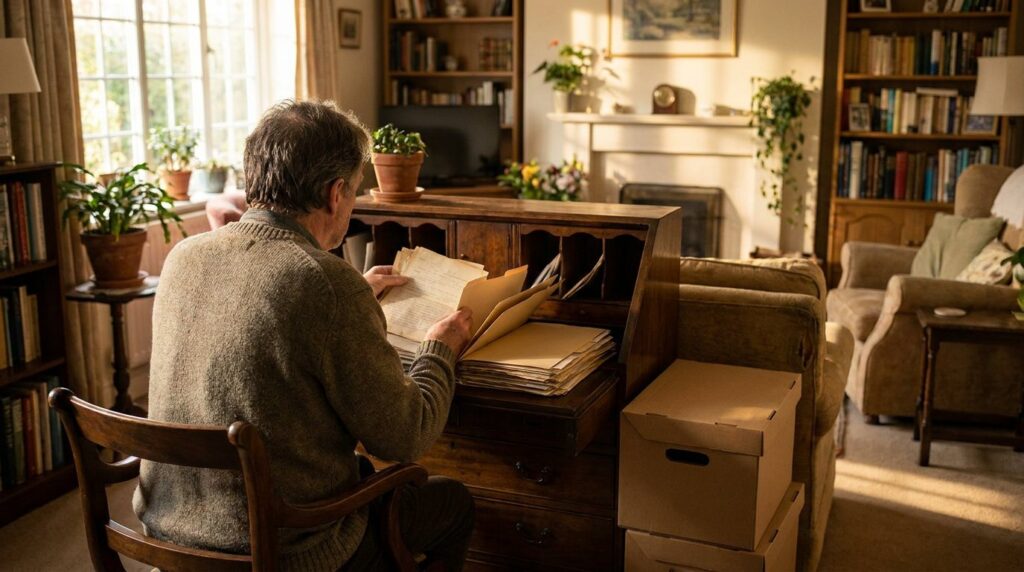
Anyone sorting out a late relative’s home soon runs into an odd puzzle. The same oak sideboard might be given one figure on the paperwork for the estate and quite a different one by an auctioneer deciding how to catalogue it. Neither figure need be wrong. They simply answer different questions, and knowing which question you are asking can save a lot of confusion when a house has to be emptied and a move arranged.
What a probate figure is trying to say
When someone dies, the people dealing with the estate usually need to put a value on what that person owned, including the contents of the home. For this purpose the question is broadly what the item could have been sold for on the open market at the date of death. The figure is a snapshot, tied to a particular day, and it exists to support the estate’s administration rather than to predict a sale.
The rules on what must be valued, how carefully and whether any tax is due can be detailed, and they change. GOV.UK sets out the official guidance for executors and administrators, and a solicitor can advise where an estate is complicated. Treat anything you read in a blog, this one included, as background rather than as advice on your own case.
What an auction estimate is trying to say
An auction estimate looks forward. It is a judgement about what buyers are likely to pay on a future sale day, usually expressed as a range. It takes in condition, age, rarity and how much appetite there currently is for that kind of piece. Brown furniture that once commanded attention may now attract few bidders, while a modest mid-century chair can draw a crowd.
An estimate can also be set with the sale in mind, pitched to encourage interest. And what the family finally receives will be the hammer price less whatever the saleroom charges, so it pays to ask about those charges before anything is consigned.
Where the two can drift apart
Several ordinary things can separate the two figures:
- Time. Months can pass between a death and a sale, and tastes do not stand still.
- Grouping. A set of dining chairs may be worth more together than a sum of single chairs, and a box of mixed china may only sell as a job lot.
- Condition on the day. A piece stored badly in an empty, unheated house may not reach the sale in the state it was valued.
- Who turns up. Two determined bidders can lift a price well beyond expectations; a quiet room can do the opposite.
Making the sums useful before the van arrives
The practical value of all this lies in the order you do things. Get belongings looked at before anything leaves the property, so that nothing of interest disappears into a clearance or a charity bag by accident. Keep a simple record, with photographs, of what was valued and where it went. If siblings are sharing out favourite pieces, a written note of who took what can prevent awkward conversations later.
It also helps to explain why you want a valuation. A figure for the estate paperwork, advice on what is worth sending to sale and a view on what can simply be given away are three separate requests, and a good valuer will want to know which ones apply. Those offering estate valuation in the Midlands include Hidden Gem Removals, whose auction background means it assesses furniture, antiques, collectables and household contents with reference to past sale results and current buyer demand. The firm can also handle removals and clearances where needed, though a valuation does not commit a family to either.
Sentiment has no column on the form
None of these figures measure what a thing meant. A scratched kitchen table can be worth very little in a saleroom and be the one item nobody is prepared to part with. Decide what stays in the family first, then let the numbers guide everything else.
Once you know which figure you need and why, the paperwork becomes less daunting and the decisions about what to move, sell or pass on become far easier to make together.